How Smart Distribution Logistics Keep Shelves Stocked
Walk into any successful convenience store and you’ll notice something that customers rarely think about but always feel: the shelves are full. The right products are in the right place, coolers are stocked, and the items customers expect to find are actually there. What looks simple on the surface is the result of something most shoppers never see — the logistics happening behind the scenes.
Wholesale distribution logistics is the engine that keeps independent retailers running. When it works well, it’s invisible. When it doesn’t, every problem shows up directly on your shelves — and in your sales. For independent retailers across Oklahoma and North Texas, understanding what good logistics actually looks like can help you evaluate whether your current distribution partner is truly working for you.
What Distribution Logistics Actually Involves
Wholesale distribution logistics covers everything that happens between a product being manufactured and it landing on your store’s shelf. That includes warehousing, inventory management, order processing, route planning, and final delivery — all coordinated so that the right products arrive at the right stores at the right time.
For independent retailers, the parts of this process that matter most are the ones you interact with directly:
- How consistently your orders arrive on the day and time you expect
- How accurately your order matches what you actually receive
- How quickly your distributor can respond when something needs to change
- How well your distributor’s product availability matches what your customers are asking for
Everything happening behind those touchpoints — the warehouses, the trucks, the routing software — exists to make those four things reliable. When it’s done well, you barely notice it. When it’s not, you notice constantly.
Why Delivery Consistency Is the Foundation
Of all the elements of wholesale distribution logistics, delivery consistency has the most direct impact on your day-to-day operations. When deliveries arrive on a predictable schedule, your team can plan around them — staffing the receiving process, organizing stockroom space, and timing restocks to match customer traffic.
When deliveries are inconsistent, that planning falls apart. Staff end up reacting to trucks arriving at unpredictable times, products sit unprocessed longer than they should, and shelves go empty while everyone waits for the next delivery — whenever that ends up being.
This is why guaranteed next-day delivery matters as much as it does. At Indian Nation Wholesale, independent retailers across Oklahoma and North Texas can count on next-day delivery as a standard, not an exception. That consistency is what allows a store to build real operational routines instead of constantly adjusting on the fly.
Accuracy Matters as Much as Speed
A fast delivery that’s missing half your order or includes the wrong items isn’t actually fast — it just moves the problem to later in the day, when staff have to identify what’s wrong, contact the distributor, and wait for a correction.
Order accuracy is one of the clearest signals of whether a distributor’s logistics operation is genuinely well-run. Behind the scenes, this comes down to how warehouses are organized, how orders are picked and verified, and what technology is used to reduce human error.
INW maintains a 99.6% error-free delivery rate — a number that reflects investment in the systems and processes that prevent mistakes before they ever leave the warehouse. For independent retailers, that accuracy translates directly into fewer disruptions, less time spent on corrections, and shelves that stay stocked with what was actually ordered.
How Warehouse Location Affects What You Get and When
One often-overlooked piece of wholesale distribution logistics is simply where a distributor’s warehouses are located relative to your store. A distributor based far from your market may offer competitive pricing, but distance creates real constraints — longer transit times, less flexibility to adjust routes, and slower response when something needs to change quickly.
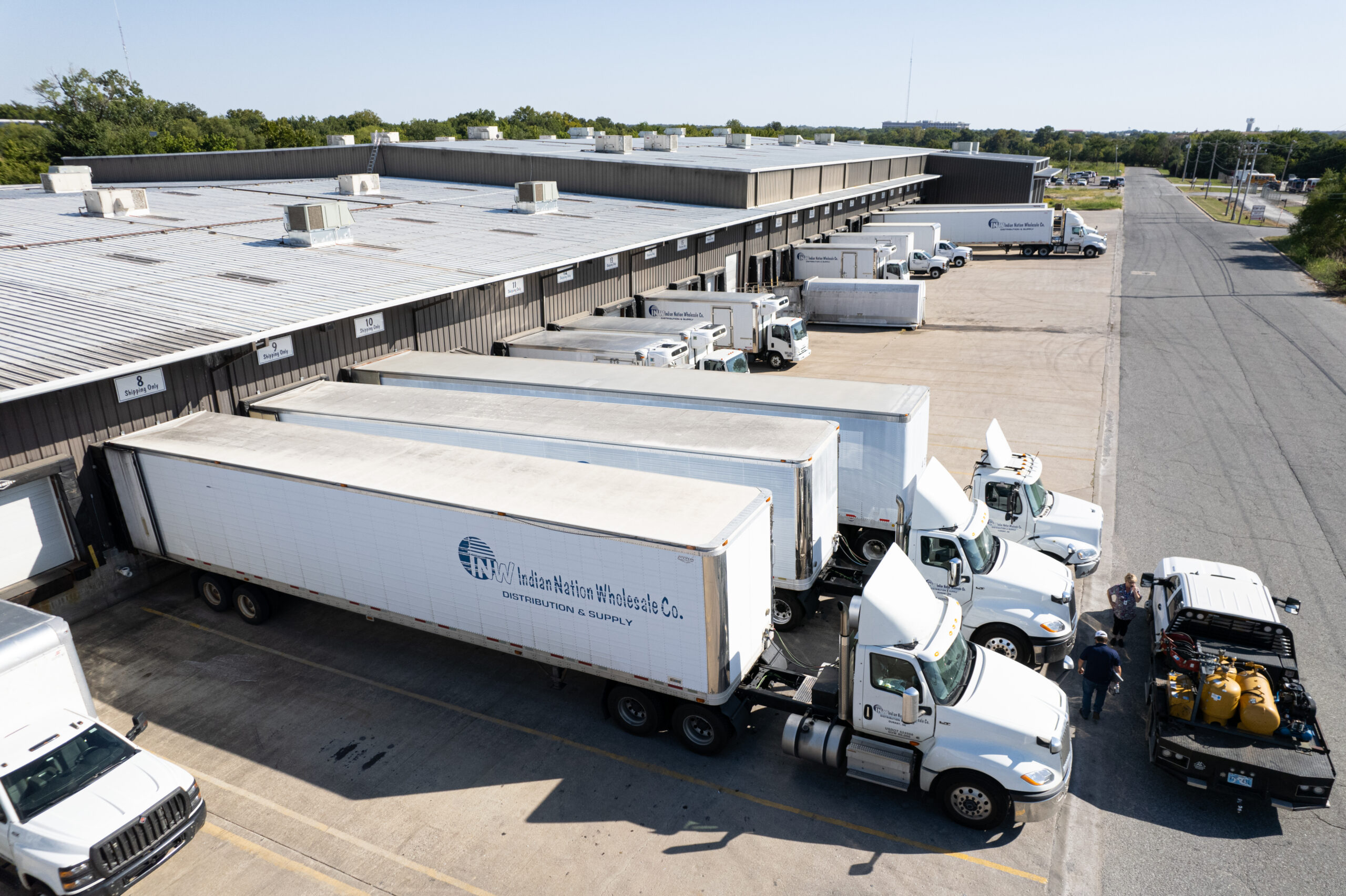
Regional distributors with warehouses positioned close to the markets they serve can offer a level of responsiveness that national distributors often can’t match. Indian Nation Wholesale operates warehouse locations in Durant, Norman, and Lawton — positioning us to serve independent retailers throughout Oklahoma and North Texas with the kind of local responsiveness that comes from genuinely being nearby, not just claiming to be.
This local footprint also means that as INW’s reach expands — including the recent growth into the Tulsa market through the Standard Acquisition — independent retailers in more areas gain access to the same logistics advantages: regional warehousing, local routes, and a distribution network built around proximity.
What Happens When Logistics Break Down
It’s worth thinking through what poor distribution logistics actually costs an independent retailer, because the effects compound quickly:
- Empty shelves during peak shopping times, when customers are most likely to walk away rather than wait
- Staff time spent troubleshooting missing or incorrect orders instead of serving customers
- Inventory planning that becomes guesswork because deliveries can’t be relied upon
- Lost sales that don’t show up as a single dramatic event, but as a steady drain over time
These costs rarely show up as a line item anywhere — which is part of why they’re so easy to underestimate. But retailers who switch from an unreliable distributor to a consistent one often notice the difference almost immediately, simply because so much friction disappears from their daily operations.
Single-Source Distribution Simplifies the Whole Picture
One of the most effective ways independent retailers can improve their own logistics experience is by reducing the number of distribution relationships they manage. Every additional vendor means another delivery schedule, another point of potential failure, and another set of logistics variables to track.
A one-stop-shop distributor with a broad product assortment — covering candy, snacks, beverages, tobacco, foodservice, and paper goods — consolidates all of that into a single, predictable relationship. With more than 7,000 products available through INW, independent retailers across Oklahoma and North Texas can simplify their entire supply chain down to one reliable partner, rather than coordinating logistics across five or six.
What to Look for in a Distribution Partner
If you’re evaluating whether your current distribution setup is serving your store well, a few questions can help clarify the picture:
- Do deliveries consistently arrive on the schedule you were promised?
- When you check an order against the invoice, how often does it match exactly?
- If something goes wrong, how quickly does your distributor respond — and how?
- Does your distributor have a physical presence in your region, or are they operating from far away?
- Could consolidating with a single distributor simplify your current logistics setup?
The answers to these questions often reveal more about a distribution relationship than pricing alone ever could.
Logistics You Can Build Your Operations Around
Good wholesale distribution logistics doesn’t announce itself — it just works, day after day, until your store’s operations are built around the assumption that it will. That reliability is the foundation independent retailers need to focus on what they do best: running a great store and serving their customers.
At Indian Nation Wholesale, we’ve spent over 70 years building the kind of distribution logistics that independent retailers across Oklahoma and North Texas can count on — guaranteed next-day delivery, a 99.6% error-free rate, regional warehouses in Durant, Norman, and Lawton, and an expanding footprint that now reaches into Tulsa. If you’re ready for a distribution partner whose logistics actually work for your store, connect with Indian Nation Wholesale today.
Author: Steven Potts